

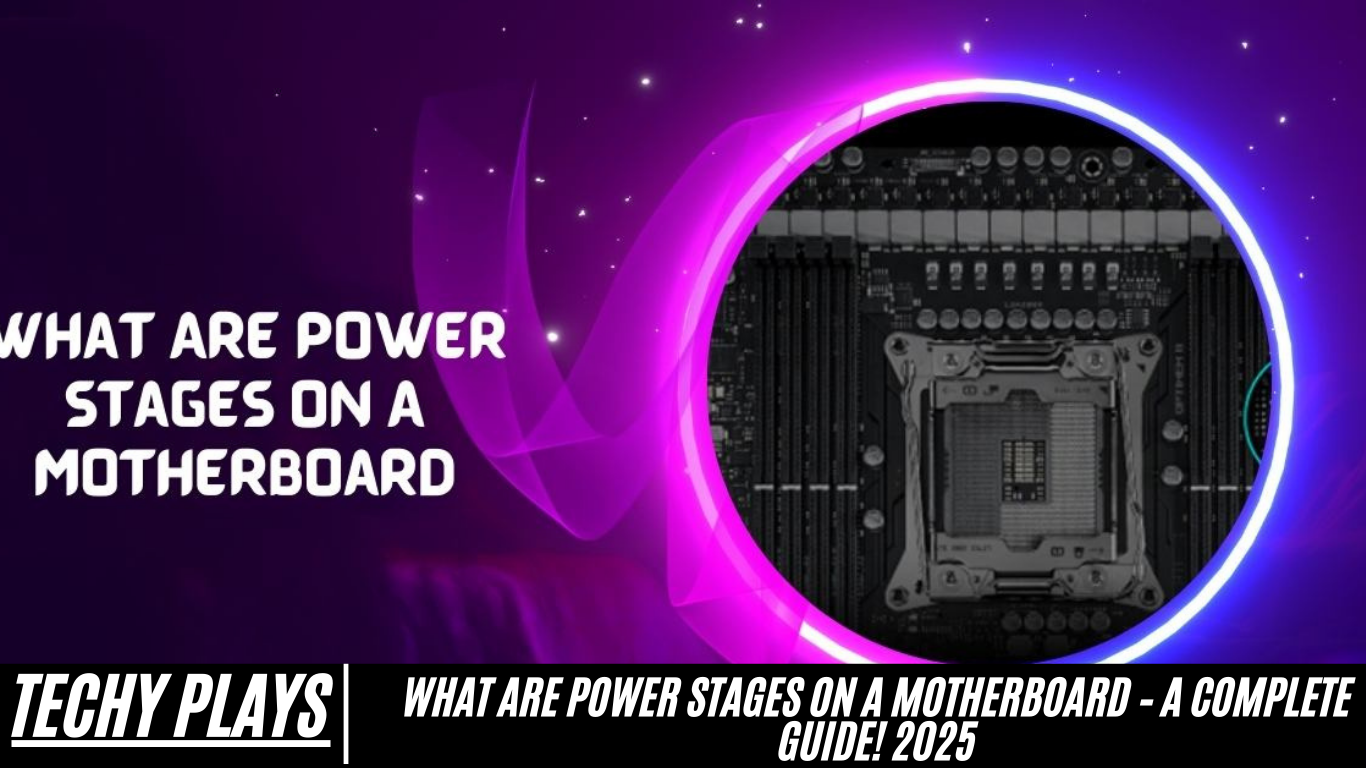
Understanding Power Delivery on a Motherboard
Understanding how power is delivered to a motherboard’s components is crucial for anyone looking to optimize or maintain a computer. Just like in a house, where electricity must be routed correctly to different rooms and appliances, a motherboard requires precise power management to ensure all components function efficiently and safely. Proper power delivery affects not only stability but also performance, especially in high-demand scenarios such as gaming, video editing, or overclocking.
Read more: How to Choose the Best Call App for Unknown Numbers 2025
Voltage Regulation Modules (VRMs) on Motherboards
To manage this critical task, motherboards use specialized components called Voltage Regulation Modules (VRMs). VRMs are responsible for converting the electricity supplied by the power supply unit (PSU) into lower, stable voltages required by various parts of the motherboard, including the CPU, GPU, RAM, and chipset. Without VRMs, the delicate electronic components could receive inconsistent or excessive voltage, which can lead to instability, overheating, or permanent damage.
Think of VRMs as traffic controllers for electricity. Just like traffic controllers ensure vehicles move smoothly and safely to their destinations, VRMs regulate the flow of electrical power, making sure the right amount reaches the right components at the right time. This regulation is especially important for high-performance systems where the CPU and GPU demand fluctuating amounts of power under different workloads.
By understanding how VRMs work and how power is distributed across a motherboard, users can make more informed decisions when selecting hardware, particularly for tasks like overclocking or building a system with high energy demands. Efficient power delivery not only enhances performance but also prolongs the lifespan of critical components, ensuring the system operates reliably over time.
Motherboard VRMs
Motherboard VRMs, or Voltage Regulation Modules, are essential components that act as your computer’s power supply traffic controllers. They are responsible for taking the raw electricity provided by your power supply unit (PSU) and converting it into precise, stable voltages needed by different parts of your computer, including the CPU, GPU, RAM, and chipset. Without properly functioning VRMs, your system could experience instability, crashes, or even premature wear of components due to inconsistent power.
High-quality VRMs are crucial for anyone looking to build a reliable and high-performance computer. They ensure your components receive the right amount of electricity at the right time, preventing issues like overheating, system instability, or reduced hardware lifespan. When choosing a motherboard, paying attention to the VRM design, quality, and cooling solutions can significantly impact your system’s overall performance and durability.
In short, if you want your computer to operate smoothly under heavy workloads or extended usage, selecting a motherboard with robust VRMs is a key factor for ensuring stability and reliability.
Importance of Efficient Power Delivery
1. Stability
Efficient power delivery on a motherboard plays a critical role in maintaining system stability. Stable power prevents unexpected crashes, freezes, or sudden shutdowns, which is especially important when running resource-intensive applications such as gaming, 3D rendering, or video editing. Proper power management ensures that each component receives a consistent voltage, allowing your system to perform reliably under varying workloads.
2. Longevity
Consistent and clean power delivery extends the lifespan of motherboard components. By reducing electrical stress and fluctuations, VRMs help minimize wear and tear on sensitive parts like the CPU and memory modules. A motherboard with high-quality power delivery can keep your system functioning optimally for years, preventing the need for frequent replacements or repairs.
Also Read: What Is Backplate Motherboard – Level Up Your Understanding!
3. Overclocking
For users interested in overclocking, efficient power delivery is not optional—it’s essential. Stable and precise voltage allows you to safely push your CPU, GPU, or RAM beyond factory settings without risking hardware damage. High-quality VRMs ensure that overclocked components receive clean power, enabling higher performance while maintaining system reliability.
4. Performance
Components operate at their peak performance when they receive stable, clean electricity. Fluctuations or poor-quality power can result in slower processing speeds, reduced efficiency, and lower overall system performance. Good power delivery ensures that your computer can handle demanding tasks smoothly, whether it’s gaming, professional work, or multitasking.
5. Energy Efficiency
Efficient power delivery also improves energy efficiency, reducing unnecessary power loss and lowering electricity consumption. This not only helps save on energy bills but also contributes to a more environmentally friendly and sustainable computing setup.
By understanding the importance of VRMs and efficient power delivery, users can make more informed decisions when selecting motherboards, ensuring both high performance and long-term reliability for their systems.
Types of Power Stages
Power stages are critical components within a motherboard’s voltage regulation modules (VRMs), responsible for converting and controlling the electricity supplied to the CPU, GPU, and other components. Different types of power stages are used depending on the motherboard design, performance requirements, and efficiency goals. Understanding these types can help users choose the right motherboard for their needs.
1. Analog Power Stages
Analog power stages rely on traditional electrical circuitry to regulate voltage. Their simplicity and proven reliability make them a common choice for many motherboards. Analog designs are easy to implement and generally robust, providing stable power for most standard computing tasks. While they may not offer the precision of modern digital solutions, their dependable performance makes them ideal for systems where extreme overclocking or high-end efficiency is not the main focus.
2. Digital Power Stages
Digital power stages use advanced digital controllers to precisely adjust voltage levels in real time. This approach allows for finer voltage regulation, improving power efficiency and overall system performance, especially during intensive tasks like gaming, 3D rendering, or video editing. Digital power stages are often found in high-performance motherboards because they can adapt dynamically to changing loads, reducing power loss and heat generation while delivering consistent performance.
Also Read: What Does Apple Call A Motherboard – Ultimate Guide – 2024!
3. Integrated Power Stages
Integrated power stages are built directly into a motherboard’s VRM design. By combining the power stage circuitry into the VRM module itself, manufacturers can save space on the motherboard and simplify the overall design. Integrated power stages are efficient and compact, making them suitable for modern motherboards with dense layouts. They provide a streamlined solution that balances performance and practicality for most users.
4. Discrete Power Stages
In contrast, discrete power stages are separate components that are not embedded directly into the VRM. This design provides greater flexibility in VRM configuration and often allows for higher performance and better thermal management. Discrete power stages are commonly found in high-end motherboards and enthusiast-grade systems, particularly those aimed at overclocking. By separating components, manufacturers can optimize power delivery and cooling more effectively, delivering stable and reliable energy to demanding components.
5. Hybrid Power Stages
Hybrid power stages combine elements of both analog and digital designs, offering a balanced approach that leverages the strengths of each. They provide the precision and adaptability of digital controllers while retaining some of the reliability and simplicity associated with analog designs. Hybrid stages are particularly useful in motherboards designed for mixed workloads, delivering efficient and stable power without sacrificing performance or reliability.
Factors Affecting Power Stage Quality
The quality of power stages on a motherboard plays a crucial role in overall system stability, efficiency, and performance. Several factors influence how well these power stages operate, and understanding them can help users select a motherboard that delivers reliable and efficient power to its components.
1. MOSFET Quality
The Metal-Oxide-Semiconductor Field-Effect Transistors (MOSFETs) used in power stages are critical for controlling voltage and current. High-quality MOSFETs can handle higher voltages and currents more reliably, ensuring consistent and efficient power delivery to the CPU, GPU, and other components. Low-quality MOSFETs may overheat or fail under heavy loads, leading to instability, reduced efficiency, and potential damage to sensitive hardware. Therefore, MOSFET quality directly impacts both the performance and durability of a motherboard’s power delivery system.
2. Component Quality
In addition to MOSFETs, the overall quality of components such as inductors, capacitors, and resistors significantly affects power stage performance. Premium components provide better voltage regulation, lower electrical noise, and improved reliability under varying workloads. A motherboard built with high-quality components ensures smoother power delivery, reduces voltage fluctuations, and contributes to a longer lifespan for critical hardware.
3. Thermal Management
Thermal management is another key factor in maintaining the integrity of power stages. Efficient heat dissipation using heatsinks, thermal pads, or advanced cooling designs prevents MOSFETs and other components from overheating. Proper thermal management ensures that power stages maintain consistent performance over time, reduces the risk of throttling or instability, and extends the overall life of the motherboard. Overheating power stages can lead to system crashes or permanent component damage, making thermal design a critical consideration for high-performance builds.
4. Power Delivery Design
The design and layout of the power delivery system also play a major role in power stage quality. A well-engineered design minimizes voltage droop, reduces electrical interference, and ensures that each component receives stable and consistent power. Factors such as the number of power phases, PCB trace layout, and component placement all influence efficiency and stability. A carefully designed power delivery system allows the motherboard to handle demanding workloads while maintaining reliable performance.
5. Regulation Mechanisms
Modern power stages use advanced voltage regulation mechanisms, such as Pulse Width Modulation (PWM) controllers, to precisely manage power delivery. These technologies ensure that voltage remains consistent under fluctuating loads, improving efficiency, reducing heat, and supporting stable operation during heavy processing tasks. Advanced regulation mechanisms are especially important for overclocking and high-performance computing, where precise voltage control is critical for stability and performance.
Also Read: Do Motherboards Come With Wifi – Unlock WiFi Features Now!
Impact on Performance and Efficiency
1. Stable Performance
High-quality power stages provide reliable and stable voltage delivery to essential components like the CPU and GPU. This stability ensures smooth system operation, reduces the risk of crashes, freezes, or unexpected shutdowns, and contributes to overall system performance. Consistent power is particularly important when running resource-intensive applications such as gaming, video editing, or 3D rendering.
2. Optimized Power Efficiency
Efficient power stages convert input power into usable output power more effectively, reducing energy waste. Improved power efficiency not only lowers electricity consumption but also reduces operating temperatures. Lower temperatures help prolong the lifespan of components and enhance the overall reliability of the motherboard, making efficient power stages essential for both performance and energy-conscious computing.
3. Enhanced Overclocking Capability
For users looking to overclock their hardware, robust power stages with precise voltage regulation are indispensable. High-quality power stages allow components to operate beyond factory specifications while maintaining stability, enabling higher performance levels for demanding tasks such as gaming, streaming, and content creation. A motherboard with strong power delivery ensures that overclocking can be achieved safely without risking component damage or system instability.
Choosing the Right Motherboard Based on Power Stages
Selecting a motherboard with high-quality power stages is essential for achieving stable and reliable system performance. The power delivery system, including VRMs (Voltage Regulator Modules) and associated power stages, determines how effectively your CPU, GPU, and other components receive electricity. When choosing a motherboard, it’s important to consider factors such as component quality, thermal management, power delivery design, and advanced voltage regulation mechanisms. These elements collectively influence stability, energy efficiency, and the motherboard’s ability to support high-performance workloads or overclocking.
How Does a VRM Enhance Performance?
A Voltage Regulator Module (VRM) enhances system performance by regulating the voltage supplied to critical components such as the CPU and RAM. By maintaining stable power delivery, a VRM prevents voltage fluctuations that can lead to system instability, unexpected crashes, or throttled performance. Well-designed VRMs also help maintain efficiency, reduce heat generation, and improve overall system reliability, particularly under heavy workloads like gaming, content creation, or professional computing tasks.
Also Read: What Is T Sensor On Motherboard – Must You Need To Know!
What are the Benefits of Having Several Power Phases?
Motherboards with multiple power phases offer several advantages for both stability and performance. More power phases allow for smoother and more consistent voltage delivery to the CPU, reducing voltage ripple and minimizing the risk of instability under high loads. Additional phases also help distribute heat more evenly across the VRM components, lowering operating temperatures and improving thermal efficiency. These benefits directly contribute to enhanced overclocking potential, better system performance, and longer component lifespan.
How Many VRMs Are There on a Motherboard?
The number of VRMs on a motherboard depends on its design, target use, and intended performance level. Entry-level motherboards may have only a few VRMs, providing basic power regulation sufficient for everyday computing. In contrast, high-end or enthusiast-grade motherboards, particularly those designed for overclocking, often feature many VRMs to ensure consistent and efficient power delivery. More VRMs help support higher power demands, reduce voltage fluctuations, and maintain system stability during intensive tasks.
1. Visual Inspection
Visual inspection involves examining the motherboard closely to assess the condition and quality of its components. This includes checking VRMs, capacitors, power phases, and cooling solutions. A careful once-over can reveal potential issues such as insufficient cooling, low-quality components, or poorly designed VRM layouts, which may impact long-term performance and reliability.
2. Motherboard Specification Sheet
A motherboard specification sheet serves as a detailed blueprint that outlines the motherboard’s features, supported components, and technical specifications. It provides critical information such as the number of VRMs, type of power stages, supported CPU socket, RAM compatibility, and cooling features. Reviewing the specification sheet helps you make an informed decision by comparing power delivery capabilities and other essential features before purchasing a motherboard.
What Are Power Phases?
Power phases are individual circuits on a motherboard that regulate and deliver power to the CPU. Each phase contributes to stable voltage supply, allowing the CPU to operate reliably even under high load conditions. A greater number of power phases generally indicates better power distribution, reduced thermal stress on individual components, and enhanced stability during demanding tasks.
What Is Motherboard Power Phase?
The term motherboard power phase refers to the number of dedicated voltage regulation circuits assigned to delivering power to the CPU and other critical components. More power phases enable smoother and more efficient voltage delivery, reducing fluctuations and supporting better performance, especially when overclocking or running intensive applications.
What Are Power Stages On A Motherboard VRM?
Power stages within a motherboard VRM convert and regulate electricity from the power supply into precise voltages required by the CPU and other components. Each power stage ensures that components receive stable and reliable power while minimizing heat and energy loss. High-quality power stages are essential for maintaining system efficiency, supporting overclocking, and preventing instability or premature hardware wear.
Teamed Power Stages Architecture – Asus
Teamed power stages architecture, as implemented by Asus, involves multiple power stages working together in synchronization to deliver stable and efficient power. This design distributes electrical load evenly across the power stages, reducing heat generation, improving efficiency, and providing enhanced voltage stability. Teamed architectures are particularly beneficial for high-end motherboards aimed at gamers, content creators, and overclocking enthusiasts, ensuring the CPU and other components receive optimal power under all operating conditions.
Whats The Difference Between 14+2 And 12+2 Power Stage
The difference between 14+2 and 12+2 power stages lies primarily in the number of power phases allocated to the CPU and other critical motherboard components. In a 14+2 configuration, 14 power phases are dedicated to the CPU, while 2 are reserved for components such as the integrated memory controller or other essential circuits. In contrast, a 12+2 setup provides 12 phases for the CPU and 2 for additional components.
Having more CPU power phases, as seen in the 14+2 configuration, generally allows for smoother and more stable voltage delivery, particularly under heavy workloads or when overclocking. This can result in better overall system performance, lower heat generation per phase, and enhanced longevity of the CPU and VRM components. Fewer phases, like in a 12+2 design, may still provide adequate power for most users, but high-performance or enthusiast-grade systems often benefit from the additional phases for improved efficiency and stability.
In essence, the difference between these power stage configurations affects power delivery quality, thermal performance, overclocking potential, and overall motherboard reliability, making it an important consideration when selecting a motherboard for high-performance computing tasks.
Z690: Do These Higher Power Phases Really Matter?
In the Z690 motherboard, higher power phases play a significant role in improving stability and overall performance. These additional power phases provide more consistent and efficient voltage delivery to the CPU, GPU, and other critical components. This is particularly important during demanding tasks such as overclocking, gaming, or professional content creation, where components require steady power under fluctuating loads. By distributing the electrical load across multiple phases, the motherboard can reduce heat generation per phase, improve efficiency, and maintain long-term component reliability.
Motherboard VRMs: What Are Power Phases, And How Many Should I Have?
When considering motherboard VRMs (Voltage Regulator Modules), power phases are the circuits responsible for regulating voltage delivered to the CPU, GPU, and other essential components. The ideal number of power phases depends on your usage requirements. For standard computing, fewer phases may suffice, but for high-performance or overclocked systems, more phases generally provide smoother, more stable power delivery, resulting in improved performance, thermal efficiency, and system reliability.
Technical Stuff: Power Phases
Power phases are critical components within a motherboard’s VRM, controlling how electricity is distributed and regulated for the CPU and other key components. Each power phase contributes to maintaining consistent voltage levels, reducing fluctuations, and ensuring the system can handle peak loads effectively. High-quality power phases are essential for sustaining stability and performance, especially in high-end motherboards designed for overclocking or professional workloads.
Also Read: Can I Install 3200mhz RAM In 2666mhz Motherboard – Explore!
Eli5: What Is Motherboard VRM “Phase” And Why Does It Matter? (Referring To Upcoming Gigabyte X570 Xtreme)
Simply put, a motherboard VRM “phase” refers to the number of circuits dedicated to regulating power for the CPU. More phases typically mean smoother and more reliable power delivery, which is essential for system stability and performance. In high-end motherboards like the Gigabyte X570 Xtreme, having additional phases ensures that power is evenly distributed, reduces thermal strain on components, and supports overclocking without causing instability or component wear.
What Are The Differences Of Specific Power Stages (DrMOS, Infineon Smart Power Stage, Etc.)
Different power stage designs, such as DrMOS or Infineon Smart Power Stage, vary in efficiency, thermal management, and voltage regulation capabilities. DrMOS stages integrate the driver, high-side, and low-side MOSFETs into a single package for improved efficiency and reduced heat. Infineon Smart Power Stages offer advanced monitoring and protection features, enhancing both stability and safety. Choosing motherboards with high-quality power stages ensures better performance, reliability, and longer component lifespan.
About VRMs & MOSFETs / Motherboard Safety With High-TDP Processors
Understanding VRMs and MOSFETs is essential for ensuring motherboard safety when using high-TDP (Thermal Design Power) processors. High-TDP CPUs draw significant power, which can stress VRMs and MOSFETs if they are poorly designed or low quality. Efficient VRM design with high-quality MOSFETs helps maintain stable voltage, reduce overheating, and prevent damage to the motherboard, ensuring safe and reliable operation even under maximum load.
What Is A Twin 16 Power Phase Layout?
A Twin 16 power phase layout features two sets of 16 power phases, totaling 32, dedicated to delivering stable power to the CPU and other critical components. This design allows for even power distribution, reducing heat per phase, enhancing voltage stability, and supporting extreme performance scenarios such as overclocking or professional workloads.
4 + 1 + 1 Phase Power Design – What Does This Mean?
A 4 + 1 + 1 phase power design indicates the motherboard allocates four phases for CPU core voltage, one phase for the integrated graphics, and one phase for the memory controller. This distribution ensures that each component receives dedicated and stable power, balancing performance, efficiency, and thermal management for mid-range and standard systems.
What Do 10+2, 5+3 Or 12 Power Phases On Motherboards On GPU Mean?
When referring to GPUs on motherboards, configurations like 10+2, 5+3, or 12 power phases indicate how voltage regulation circuits are divided between the GPU core and memory. More power phases allow smoother power delivery, lower voltage ripple, improved thermal performance, and enhanced stability during demanding GPU-intensive tasks such as gaming, rendering, or cryptocurrency mining.
Is 16+1 Power Stages Good?
Yes, a 16+1 power stage configuration is considered highly effective for modern motherboards. It provides robust power delivery to the CPU, enhances system stability, reduces heat generation per stage, and supports overclocking and high-load scenarios. Motherboards with this configuration are ideal for users seeking reliable performance, efficient power management, and long-term component longevity.
7+1+1 Power Phase
A 7+1+1 power phase configuration typically refers to a motherboard design in which seven power phases are dedicated to the CPU core voltage, one phase is assigned to the integrated graphics, and an additional phase supports the memory controller. This configuration ensures stable and efficient power delivery to each component, reducing voltage fluctuations and heat generation per phase. By distributing the electrical load effectively, the 7+1+1 design enhances system stability, supports moderate overclocking, and provides reliable performance for both gaming and professional workloads.
How Many VRM Phases Do I Need
The number of VRM phases required on a motherboard largely depends on your CPU’s power demands and intended usage. For standard computing tasks, a motherboard with fewer VRM phases may be sufficient. However, for high-performance systems, gaming rigs, or overclocked setups, more VRM phases generally provide smoother voltage delivery, improved thermal management, and enhanced overall system stability. In essence, increasing the number of VRM phases distributes power more evenly, reduces stress on individual components, and helps maintain consistent performance under heavy loads.
Four Phase Power Mode?
Four-phase power mode refers to a motherboard’s power delivery system consisting of four voltage regulation circuits. Each phase contributes to controlling the voltage supplied to the CPU and other components. While a four-phase design may not be as robust as higher-phase configurations, it still provides efficient power distribution for mid-range systems. This setup can handle moderate workloads reliably, ensuring stable performance and adequate thermal management without overcomplicating the VRM design.
Would Someone Explain Power VRM Phases?
Power VRM phases are the individual circuits within a motherboard’s VRM (Voltage Regulator Module) that regulate and deliver electricity to critical components like the CPU, GPU, and memory. The number of phases determines how smoothly power is distributed. More phases generally lead to better stability, reduced voltage ripple, lower heat per phase, and improved performance, particularly during high-demand tasks or overclocking. Understanding VRM phases is essential when selecting a motherboard, as it directly impacts system reliability, efficiency, and long-term component longevity.
Frequently Asked Questions(FAQs)
1. What is the role of VRMs and power stages in a motherboard?
VRMs and power stages regulate and stabilize the voltage supplied to components like the CPU and GPU, ensuring consistent performance, preventing crashes, and protecting hardware from damage. High-quality VRMs contribute to efficiency, thermal management, and support for overclocking.
2. How many VRM phases do I need for overclocking?
For overclocking, more VRM phases are generally better. Motherboards with higher phase counts provide smoother power delivery, reduced heat per phase, and enhanced stability, allowing CPUs to safely reach higher clock speeds without voltage fluctuations.
3. Are integrated or discrete power stages better?
Both have advantages. Integrated power stages save space and improve efficiency, while discrete power stages allow for greater flexibility, higher thermal performance, and better overclocking potential. Your choice depends on your motherboard’s intended use and performance needs.
4. How can I tell if my VRM or power stage is failing?
Signs include overheating near the VRM area, system instability, crashes under load, reduced performance, or the motherboard failing to power on. Monitoring temperatures and inspecting components can help detect issues early.
5. Do power stages impact gaming performance?
Yes. Efficient power stages provide stable voltage to the CPU and GPU, preventing frame drops, crashes, and throttling. High-quality VRMs support higher clock speeds and consistent performance during intense gaming sessions.
Conclusion
Power stages and VRMs are vital for stable, efficient, and high-performance computing. Choosing a motherboard with high-quality power delivery ensures smooth operation, longevity, and reliability for gaming, professional workloads, and overclocking. Understanding VRM phases, power stage types, and motherboard specifications empowers users to make informed decisions, maximizing system performance while protecting hardware from stress and overheating.
