

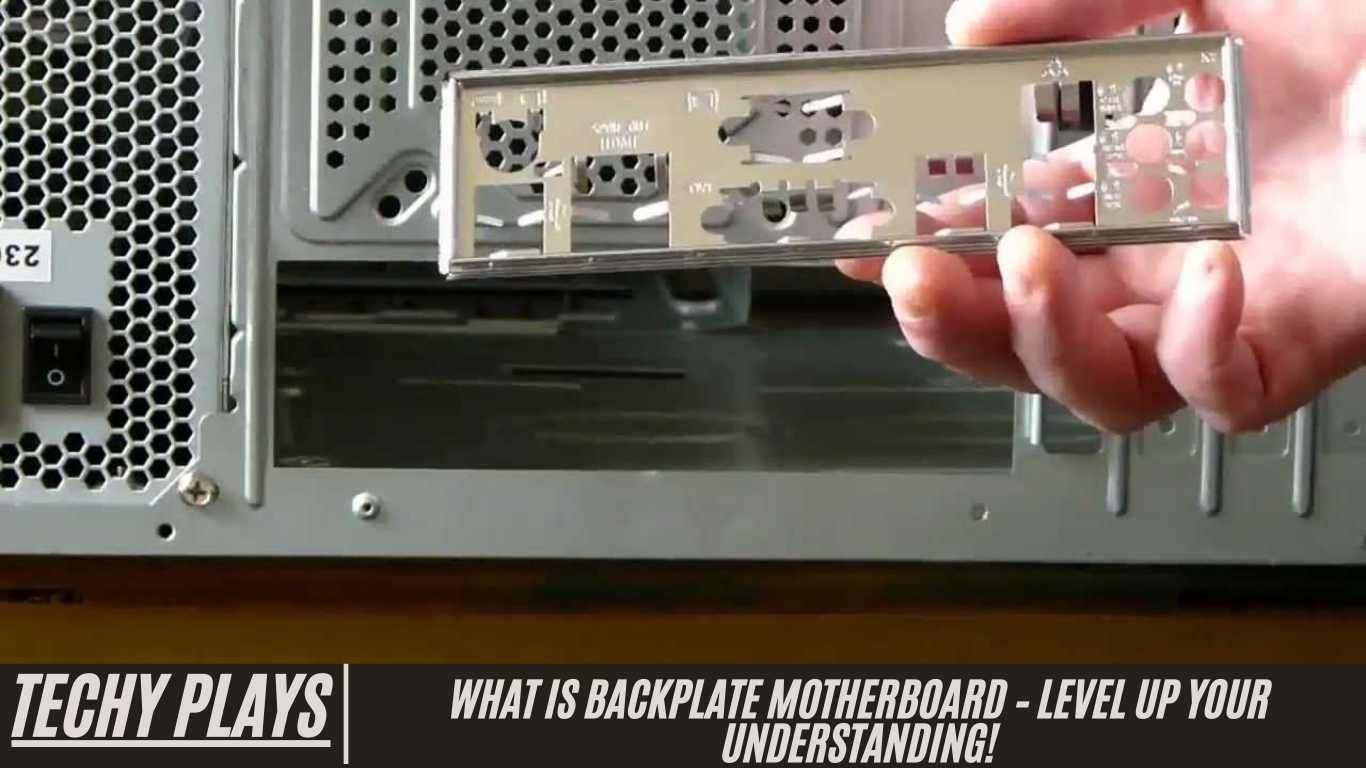
What Is A Backplate For On A Motherboard?
A backplate on a motherboard serves as a strong and stable foundation for connecting various critical components such as ports, slots, and connectors. It provides structural support, ensuring that components remain securely in place and do not wobble or loosen over time.
Think of the backplate as the backbone of your computer. Just as a building relies on a solid foundation to stay upright and stable, your computer depends on the motherboard backplate to maintain integrity and reliability. By providing this support, the backplate makes installing and securing components like the CPU cooler, RAM, and expansion cards much easier, reducing the risk of damage or connectivity issues.
In essence, the backplate is a support system for your computer’s internal hardware, ensuring everything functions smoothly while protecting delicate components from mechanical stress.
Read more: Do Motherboards Have Integrated Graphics? – Detailed Guide!
Components Of A Backplate Motherboard
1. Mainboard
The mainboard, also known as the motherboard, is the central hub of your computer. It’s essentially the heart of your system, connecting all essential components and allowing them to communicate efficiently. The mainboard is a large circuit board embedded with tiny pathways, called traces, that enable data and power to flow between the CPU, RAM, storage devices, and other peripherals.
A high-quality mainboard ensures stability and supports advanced features like multiple graphics cards, high-speed memory, and fast data transfer between devices, making it a critical element in overall system performance.
2. Input/Output Ports
Input/output (I/O) ports act as the interface between your computer and the outside world. They are like the doors and windows of your computer, allowing you to connect keyboards, mice, monitors, USB drives, and other peripherals.
I/O ports come in various types, including USB, HDMI, Ethernet, and audio jacks, each serving a specific purpose. These ports are essential for enabling smooth communication between your computer and external devices, ensuring data is transmitted accurately and efficiently.
3. CPU Socket
The CPU socket is a specialized slot on the motherboard where the central processing unit (CPU)—the brain of your computer—is installed. This socket is designed to fit the CPU precisely, providing all the electrical connections needed for data transfer.
The CPU socket ensures the processor is securely seated and maintains optimal contact with the motherboard. It plays a crucial role in system stability, performance, and heat management, making it one of the most important components on the motherboard.
4. RAM Slots
RAM slots, also known as memory slots, are designated spaces on the motherboard where RAM sticks are installed. These slots allow your computer to temporarily store and access data quickly while it is powered on.
Think of RAM slots as the beds for your computer’s memory. The number of RAM slots directly influences the maximum memory capacity of your system. More RAM slots mean you can install additional memory sticks, improving multitasking performance and overall system speed.
5. Expansion Slots
Expansion slots on a motherboard are like extra rooms in a house that can be customized to meet your specific needs. These slots allow you to add hardware components such as graphics cards, sound cards, network cards, or additional USB ports.
By utilizing expansion slots, you can enhance your computer’s functionality, improve graphics performance for gaming or professional design work, and add specialized features that aren’t built into the motherboard. Expansion slots are critical for users who want a versatile and upgradeable system.
6. Power Connectors
Power connectors are essential components on a motherboard, providing the necessary electricity to run all parts of your computer. They are similar to electrical outlets in a house, supplying power to the CPU, graphics card, RAM, and other components.
Without proper power connectors, your computer cannot function. Motherboards typically include a 24-pin main power connector and additional connectors for CPU and GPU power, ensuring stable and consistent power delivery to all components. High-quality power connectors also contribute to system reliability and longevity.
Are All Motherboard Backplates the Same?
No, not all motherboard backplates are identical. Just like no two people are exactly alike, motherboards vary in design, size, and functionality. Different motherboards may offer different numbers of ports, connectors, and slots, reflecting the diverse needs of users.
For example, some motherboards feature an extensive array of USB, HDMI, and audio ports, while others focus on a minimalist approach with only the essential connections. You can compare it to cars: some vehicles are equipped with advanced features like premium sound systems, heated seats, and smart interfaces, while others provide just the basics.
When choosing a motherboard, it’s important to consider the backplate’s layout and compatibility with your components. Selecting a motherboard with the right backplate ensures proper alignment, stability, and optimal performance, tailored to your computing needs.
Do I Need a Motherboard Backplate?
Yes, a motherboard backplate is a crucial component for any computer build. Think of it as the solid foundation of a building; without it, the structure may not function correctly or safely.
The backplate provides essential support, holding all components securely in place. It ensures that parts such as the CPU, GPU, RAM, and expansion cards remain stable and properly connected, even during movement or transportation.
Having a backplate not only improves structural integrity but also contributes to the overall longevity and reliability of your system. While it may seem like a small piece of hardware, the backplate plays a significant role in maintaining the performance and durability of your computer.
1. Should You Remove Motherboard Backplates?
Removing a motherboard backplate should only be done if absolutely necessary, such as during component upgrades or troubleshooting. It’s like taking a crucial piece out of a puzzle—without it, things may not fit together correctly.
The backplate is designed to provide stability and support, keeping the motherboard rigid and ensuring that installed components do not shift or become loose. Unless you have a specific reason, it’s best to leave the backplate intact to maintain system stability and avoid potential damage.
Do Motherboards Come With Backplates?
Yes, most modern motherboards include backplates as part of their design. Think of it like buying a car that already comes with functional tires—they are essential for proper operation.
Backplates are critical because they provide structural support, keeping components aligned and securely in place. However, it’s always advisable to check the motherboard specifications before purchase, as some budget or specialized models may not include a backplate. Ensuring that your motherboard has a compatible backplate will save you time during installation and reduce the risk of damage.
Benefits Of Using Backplate Motherboards
1. Enhanced Stability
Backplate motherboards offer increased structural stability, providing a firm base that prevents components from shifting or loosening. This is especially important for high-performance systems or setups that experience frequent transportation, as it reduces the risk of hardware damage.
2. Simplified Installation
Motherboards with integrated backplates simplify the assembly process. Components such as the CPU cooler, graphics card, and RAM can be installed more efficiently, saving time and effort compared to traditional motherboards. This makes building a computer more accessible for beginners while also streamlining the process for experienced builders.
3. Improved Cooling Efficiency
The integrated backplate design contributes to better heat dissipation, which is essential for maintaining optimal operating temperatures. By facilitating airflow and supporting thermal management of critical components like the CPU, GPU, and VRMs, backplate motherboards help enhance system performance and extend hardware longevity.
4. Space Optimization
Backplate motherboards often feature compact, streamlined designs that maximize the use of space within the computer case. This allows for better organization, improved airflow, and the ability to create aesthetically pleasing builds without compromising functionality.
5. Reduced Cable Clutter
A motherboard backplate can serve as a central hub for cable management, minimizing clutter inside the case. By keeping cables organized and out of the way, airflow improves, system cooling is enhanced, and the overall interior of the computer remains tidy and professional-looking.
Common Issues And Troubleshooting Tips
1. Compatibility Problems
One of the most common issues with backplate motherboards is hardware compatibility. Before installing components like CPUs, RAM modules, or expansion cards, ensure they are fully compatible with your motherboard’s specifications. Incompatible components can lead to boot failures, system instability, or reduced performance.
Updating the motherboard BIOS to the latest version can often resolve compatibility issues, as manufacturers release updates to support newer hardware. Additionally, consulting the motherboard’s manual or official website for supported hardware lists can help prevent mismatched components and save time during installation.
2. Faulty Connectors
Faulty or loose connectors are another frequent problem. Inspect all power, data, and peripheral connectors carefully to ensure they are intact and seated properly. Loose connectors can cause intermittent failures, unexpected shutdowns, or peripherals not being recognized.
If a connector appears damaged or worn, reseating it or replacing it with a compatible replacement is necessary to restore reliable connectivity. Proper connector management also reduces stress on cables and pins, extending the lifespan of both the motherboard and attached components.
3. Overheating
Overheating can significantly affect the performance and longevity of your computer. To prevent overheating, maintain proper airflow within the case by regularly cleaning dust from fans, heat sinks, and air vents.
Upgrading cooling solutions, such as installing a high-performance CPU cooler, additional case fans, or liquid cooling systems, can further enhance thermal management. Monitoring temperatures with software tools ensures your CPU, GPU, and VRM operate within safe limits, reducing the risk of thermal throttling or hardware failure.
4. Power Supply Issues
Power supply problems can manifest as random shutdowns, boot failures, or instability under load. To troubleshoot, check the integrity of all power connectors and cables, ensuring they are firmly connected and undamaged.
Testing the power supply with a multimeter can confirm it delivers consistent voltage. If issues persist, upgrading to a higher-rated or more reliable power supply unit (PSU) can stabilize the system and prevent electrical problems, especially for high-performance builds with multiple components.
5. BIOS Errors
BIOS errors are another potential source of system instability or boot failures. Resetting BIOS settings to default values can resolve misconfigurations, while updating to the latest version from the manufacturer’s website ensures compatibility with new hardware and fixes known bugs.
Additionally, carefully configuring BIOS settings for your specific hardware setup, such as RAM timings, CPU voltage, and boot order, is critical to prevent recurring errors and maintain optimal performance.
6. Memory Problems
Memory issues often cause crashes, freezes, or blue screens. To troubleshoot, reseat RAM modules in different slots to ensure proper contact. Testing each RAM stick individually can help identify faulty modules.
Using memory diagnostic tools can also detect errors and verify the integrity of your RAM. Ensuring memory modules are compatible with the motherboard’s supported specifications, including speed and voltage, reduces the likelihood of memory-related problems.
Comparison with Other Types of Motherboards
When comparing backplate motherboards to traditional motherboards, several key differences stand out. Backplate motherboards come with the backplate pre-attached, simplifying installation and reducing the risk of alignment errors. This feature is particularly useful for beginners or those building compact or high-performance systems.
Traditional motherboards, on the other hand, require separate backplate installation, which can be more complex and time-consuming. Improper installation may cause instability or damage to components.
Backplate motherboards also tend to have more streamlined designs, improving cable management and airflow within the case. Better airflow enhances cooling efficiency, while organized cable routing contributes to a clean and professional-looking build. These advantages make backplate motherboards a preferred choice for users seeking convenience, stability, and aesthetic appeal in their computer builds.
Why a CPU Backplate?
A CPU backplate plays a critical role in maintaining the structural integrity of your motherboard. It provides sturdy support for heavy CPU coolers, preventing the motherboard from bending, warping, or sustaining damage under pressure. By securing the cooler firmly, the backplate ensures consistent contact between the CPU and its cooler, which is essential for efficient heat transfer and effective thermal management.
Without a CPU backplate, heavy coolers could compromise the motherboard’s stability, leading to potential long-term damage or reduced performance. For high-performance systems with larger or custom coolers, a CPU backplate is highly recommended to maintain both safety and optimal functionality.
Motherboard Back Plates – Why?
Motherboard backplates are designed to provide comprehensive structural support to the entire motherboard. They protect against physical damage caused by bending, twisting, or accidental impact. Backplates also assist in heat dissipation by allowing better airflow and acting as a heat spreader in some designs.
Additionally, a backplate ensures that all ports, slots, and connectors remain properly aligned, making installation of components such as CPUs, RAM, and GPUs easier and more reliable. In essence, a motherboard backplate enhances stability, prolongs the life of the motherboard, and contributes to better system performance.
Do I Need the Backplate?
While not always mandatory, using a motherboard backplate is strongly recommended. It supports the motherboard, prevents bending, and helps with heat management. Systems with heavy components, such as large CPU coolers or multiple GPUs, benefit significantly from a backplate as it maintains stability and reduces stress on the PCB.
Installing a backplate can also improve the overall longevity of your system, ensuring that components remain securely mounted and function efficiently over time. Even for standard builds, a backplate adds an extra layer of protection and reliability.
My Motherboard Didn’t Ship With a Backplate… Is This Normal?
Although uncommon, some motherboards—particularly budget models—may not include a pre-installed backplate. In such cases, it’s usually possible to purchase a compatible backplate separately.
Always check the motherboard specifications or the user manual to confirm whether a backplate is included and ensure compatibility before installation. Using a proper backplate is important for maintaining system stability and protecting critical components.
What’s This on the Back of My Motherboard?
If you notice a metal plate on the back of your motherboard, this is likely a backplate. It provides structural support, protects the board from physical damage, and aids in heat dissipation. A properly installed backplate keeps the motherboard flat and stable inside the case, preventing flexing when components such as CPUs or GPU coolers are mounted.
Metal Backplate of CPU Cooler Touching Motherboard – Ok or Not?
If the backplate of your CPU cooler makes contact with the motherboard, it is generally safe as long as the cooler is designed for your system. Most CPU cooler backplates include non-conductive padding or spacers to prevent electrical short circuits.
To ensure safety, always follow the manufacturer’s installation instructions and verify that all contact points are insulated properly. Correct installation prevents damage and ensures optimal cooling performance.
Do GPU Backplates Matter?
GPU backplates, while not essential, offer several benefits. They provide structural support to prevent graphics cards from sagging under their weight, which can stress the PCIe slot. Many GPU backplates also assist with heat dissipation by spreading and releasing heat away from the PCB. Additionally, backplates protect the graphics card from physical damage and can enhance the aesthetic appearance of your build, making them particularly valuable for high-performance or custom systems.
Benefits of a Motherboard Backplate
A motherboard backplate offers multiple advantages:
- Structural Support: Prevents bending and warping of the motherboard, ensuring that heavy components remain securely mounted.
- Heat Dissipation: Helps in maintaining optimal operating temperatures for critical components.
- Physical Protection: Shields the motherboard from accidental impacts, scratches, or electrical shorts.
- Stability: Keeps the motherboard flat and stable within the case, improving the overall reliability of the system.
Are All Motherboard Backplates the Same?
No, motherboard backplates vary in design, size, and compatibility. They are specifically engineered to fit certain motherboard models and CPU cooler configurations. Before purchasing or installing a backplate, always confirm compatibility with your motherboard to ensure proper alignment and safe installation. Using an incompatible backplate can cause installation issues or even damage components.
Why Is a Motherboard Backplate Important?
A motherboard backplate is essential for maintaining the integrity and reliability of your system. It prevents the motherboard from bending under heavy components, facilitates heat dissipation, and protects against physical damage and electrical shorts. By providing stability and support, a backplate contributes to improved system longevity and safer hardware installation.
How to Install the Motherboard Backplate?
Installing a motherboard backplate is straightforward but requires careful alignment. Start by aligning the backplate with the motherboard’s mounting holes. Secure it using screws provided by the manufacturer, ensuring it sits flush against the board.
Follow any specific instructions provided by your motherboard or cooler manufacturer to avoid improper installation. Correct installation ensures optimal support for heavy components, stable mounting, and efficient heat dissipation.
How to Choose the Right Motherboard Backplate?
Selecting the right motherboard backplate is essential for both stability and performance. Always choose a backplate that is fully compatible with your specific motherboard model and CPU cooler. Check the specifications and compatibility guidelines provided by the motherboard manufacturer and other trusted brands to ensure a proper fit.
Choosing an incompatible backplate can lead to poor cooler contact, motherboard bending, or difficulty during installation. High-quality backplates are designed to provide both structural support and efficient heat dissipation, making compatibility a critical factor when building or upgrading your system.
Why Is A Motherboard Backplate Necessary?
A motherboard backplate is necessary for multiple reasons. Primarily, it provides structural support, preventing the motherboard from bending, warping, or flexing under the weight of heavy components such as CPU coolers or high-end GPUs.
Additionally, a backplate aids in heat dissipation, helping maintain safe operating temperatures for critical components. It also protects the motherboard from physical damage, ensuring a secure and stable mounting environment. Overall, the backplate contributes to system longevity and reliability.
Do You Need a CPU Backplate?
Yes, a CPU backplate is highly recommended for almost all desktop builds. It provides essential support for the CPU cooler, preventing the motherboard from bending or flexing under pressure.
By securing the cooler firmly, the backplate ensures proper contact between the CPU and the heatsink or cooler, optimizing heat transfer and thermal management. A CPU backplate enhances system stability, performance, and component lifespan, making it a crucial element in both standard and high-performance builds.
Does AM4 Motherboard Come With Backplate?
Yes, most AM4 motherboards include a pre-installed backplate. This backplate is specifically designed to support the CPU cooler and maintain secure mounting for AMD processors.
The AM4 backplate ensures proper heat dissipation and provides structural stability, which is especially important for larger coolers or overclocked systems. While pre-installed backplates are standard for AM4 boards, always confirm the specifications to ensure it matches your cooler and system requirements.
Are Motherboard Backplates Interchangeable?
Motherboard backplates are sometimes interchangeable, but compatibility is not guaranteed. Backplates are typically designed to fit specific motherboard models and CPU cooler designs.
Before swapping or installing a different backplate, always check compatibility to avoid installation issues or damage. Using a compatible backplate ensures secure mounting, proper heat dissipation, and overall system stability.
What Is Backplate Motherboard Used For?
A motherboard backplate serves several important purposes. It provides structural support to prevent bending or warping, aids in heat dissipation, and protects the motherboard from physical damage such as scratches or impacts.
Additionally, a backplate ensures stable and reliable installation of components like CPU coolers, GPUs, and memory modules. By maintaining flatness and stability, it improves both performance and the lifespan of your hardware.
Motherboard Backplate Replacement
Replacing a motherboard backplate requires careful handling. Start by removing the existing plate without applying excessive force to the motherboard. Once removed, install a new backplate that is compatible with both your motherboard and CPU cooler.
Ensure the replacement backplate is properly aligned with the mounting holes and securely fastened. Using the correct backplate maintains system stability, prevents bending, and ensures efficient heat dissipation.
Motherboard Backplate AM4
AM4 motherboards typically come with a backplate designed specifically for AMD processors. This backplate supports the CPU cooler, ensuring proper mounting and efficient heat dissipation. The AM4 backplate is engineered to maintain motherboard stability while accommodating heavier coolers, making it an essential component for AMD-based builds.
Motherboard Backplate Installation
Installing a motherboard backplate is straightforward if done correctly. Align the backplate with the motherboard’s mounting holes, secure it with screws, and ensure it sits flush with the board.
Follow the manufacturer’s installation instructions carefully to avoid improper placement. Correct installation guarantees stable mounting for heavy components, enhances heat dissipation, and prevents damage to the motherboard during operation.
Motherboard Backplate Fell Off?
If your motherboard backplate has fallen off, reattach it immediately to maintain stability. Align the backplate with the mounting holes and secure it firmly with screws, ensuring they are tight enough to hold the backplate in place without damaging the motherboard.
Properly reinstalled backplates restore structural support, prevent motherboard flexing, and ensure that heavy components like CPU coolers remain securely mounted. Regularly checking the backplate during maintenance helps prevent future issues.
Do Intel Motherboards Come With Backplate?
Most Intel motherboards, particularly those designed for high-performance builds with heavy CPU coolers, come with a pre-installed backplate. This backplate provides essential structural support to prevent motherboard bending and ensures stable mounting for CPU coolers.
Even in mid-range or budget Intel motherboards, backplates are often included to maintain system integrity, especially when using aftermarket coolers. The inclusion of a backplate enhances thermal performance and stability, making it a critical component for safe and efficient operation.
Am I Supposed to Have a Backplate for My Motherboard / CPU?
Yes, having a backplate is strongly recommended. It provides crucial support for the motherboard, preventing bending or warping caused by heavy CPU coolers or other components.
A properly installed backplate ensures that the CPU cooler maintains firm contact with the processor, improving heat dissipation and overall system stability. By distributing pressure evenly, it reduces stress on the motherboard and enhances the longevity of your PC build.
How Relevant is a Motherboard in a PC?
The motherboard is one of the most important components in a computer. It acts as the central hub, connecting and supporting all other parts, including the CPU, RAM, storage devices, and peripheral interfaces.
Without a reliable motherboard, communication between components would fail, leading to system instability or non-functioning hardware. Essentially, the motherboard is the backbone of a PC, ensuring seamless interaction between all components and enabling the system to function efficiently.
Frequently Asked Questions(FAQs)
Is A Motherboard Backplate Necessary?
Yes, a motherboard backplate is necessary for building a stable and reliable PC. It provides structural support, secures components, and ensures the proper functioning of the system. Just like a foundation in a building, a backplate is essential for maintaining overall stability and protecting your investment.
Motherboard Back Plates – Why?
Motherboard backplates serve several crucial functions. They provide structural support, helping to prevent bending or warping. They also aid in heat dissipation and act as a secure mounting point for ports, connectors, and heavy components. By keeping the motherboard stable, backplates contribute to better system performance and reliability.
What Is the Difference Between CPU Retention Bracket and CPU Backplate?
The CPU retention bracket is primarily responsible for securing the processor in place on the motherboard. In contrast, the CPU backplate provides structural support to the motherboard itself, ensuring stability when mounting CPU coolers. Backplates also aid in heat dissipation and help evenly distribute pressure from heavier cooling solutions.
What Exactly Is a Backplate?
A backplate is a metal or plastic plate installed on the rear side of a motherboard. It provides structural support, assists in heat dissipation, and serves as a mounting point for various components, including CPU coolers and connectors. Backplates ensure that the motherboard remains flat and stable within the case, enhancing system durability.
Practical Utility of a Motherboard Backplate
Motherboard backplates provide essential benefits such as structural stability, heat dissipation, and a secure mounting base for components. They help maintain efficient communication between hardware parts, reduce stress on the motherboard, and improve overall system longevity.
Does My AMD Motherboard Come With a Backplate and How Do I Proceed With the Installation?
Most AMD motherboards come with a pre-installed backplate designed specifically for AMD processors. To install the motherboard, align it with the case, secure it in place, and follow the manufacturer’s instructions to connect all components. Proper installation ensures stability and optimal thermal performance.
Is a CPU Cooler Backplate Really Needed?
Yes, a CPU cooler backplate is essential for securing the cooler properly. It provides a stable mounting point, distributes pressure evenly across the motherboard, and ensures efficient heat dissipation. Backplates are especially important for heavy or high-performance cooling solutions.
CPU Cooler Touches Graphics Card Backplate, Is It OK?
If a CPU cooler slightly touches the GPU backplate, it is generally safe as long as there is no excessive pressure or bending. Ensure proper clearance and airflow to prevent overheating or obstruction. Proper component arrangement avoids interference while maintaining thermal efficiency.
[Solved] – CPU Cooler Backplates – Common?
Yes, CPU cooler backplates are standard on many modern cooler models. They provide stability, proper mounting, and improved heat dissipation, making them an integral part of both stock and aftermarket cooling solutions.
Conclusion:
A motherboard backplate is a vital component that enhances system stability, ensures proper cooler mounting, prevents bending, and improves overall heat dissipation. Whether you’re building a new PC or upgrading components, choosing the right backplate ensures long-term reliability, better performance, and safer hardware installation.
