

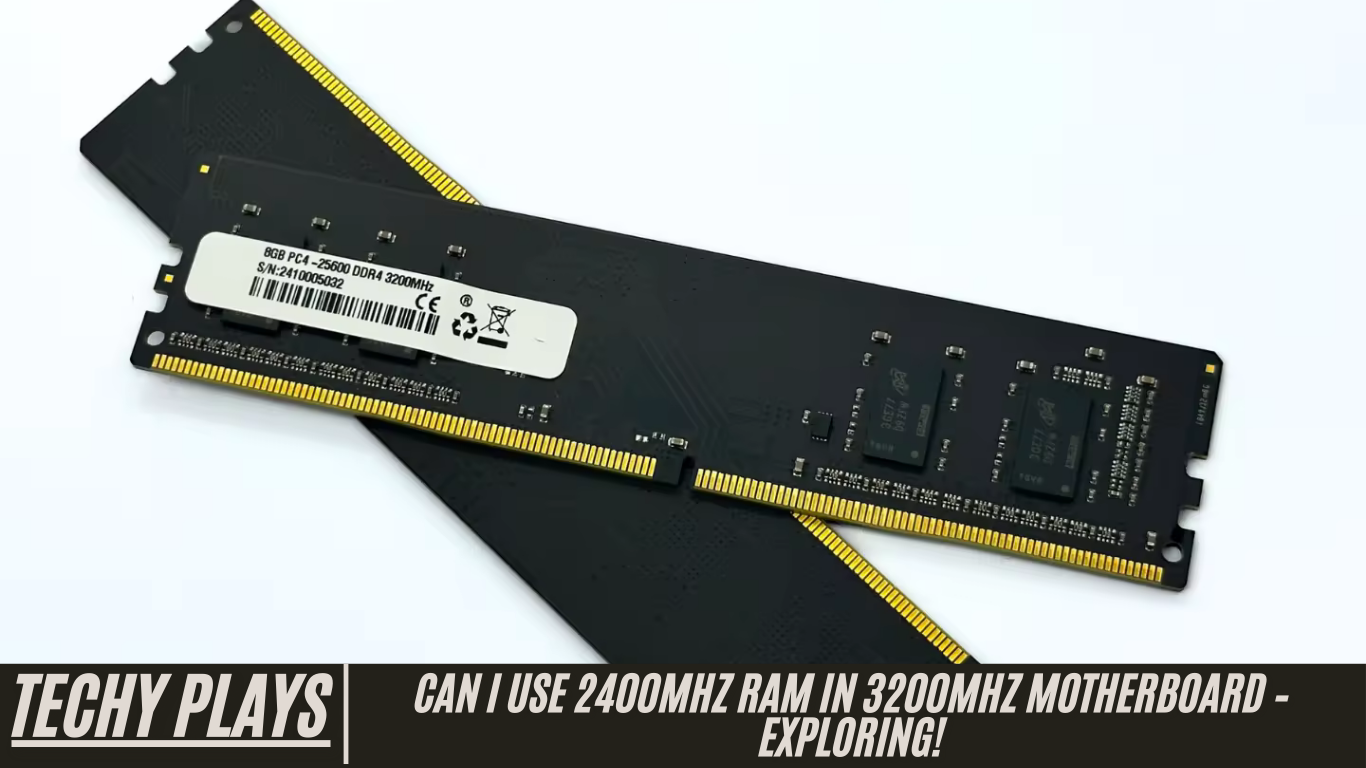
When upgrading or building a PC, ensuring compatibility between components is crucial for achieving optimal performance and stability. Every part of your system, from the motherboard to the RAM, processor, and storage devices, must work together seamlessly. Neglecting compatibility can lead to system instability, reduced performance, or even hardware damage in extreme cases. Therefore, understanding how different components interact is essential for anyone looking to build or upgrade a PC.
Yes, you can use slower RAM in a faster motherboard. Motherboards are designed to support a range of RAM speeds, and when a slower RAM module is installed, the motherboard will adjust the operation speed to match the maximum supported frequency of the RAM. For example, if you install 2400MHz RAM in a motherboard that supports up to 3600MHz, the system will operate the RAM at 2400MHz, which is slower than the motherboard’s full potential. While this allows the system to function without issues, it also means that you won’t be taking full advantage of the motherboard’s capabilities or the potential performance gains offered by faster RAM.
Understanding RAM compatibility is important not only for system stability but also for optimizing performance. Using RAM with a speed lower than the motherboard’s maximum limit may be suitable for general tasks like web browsing, office work, or media consumption. However, for gaming, video editing, or other memory-intensive applications, investing in RAM that matches the motherboard’s top supported speed can result in noticeable improvements in system responsiveness and overall performance. Additionally, features like XMP (Extreme Memory Profile) profiles allow compatible RAM to run at higher speeds automatically, providing a simple way to maximize memory performance without manual configuration.
In this article, we’ll delve into this topic to provide clarity and guidance for users seeking to make informed decisions about their PC builds. By understanding how RAM speed interacts with motherboard capabilities, users can make smarter choices when selecting memory modules, balancing cost, performance, and future-proofing considerations. Ultimately, ensuring proper component compatibility is a key step toward building a reliable, high-performing PC tailored to your specific needs.
Read more: Asrock Motherboard Wifi Not Working – Resolve The Issues!
Understanding RAM Speeds
RAM speed is one of the key factors that determine how quickly your computer can process information. Think of it as how fast your computer can “think.” The faster the RAM, the quicker your system can handle multiple tasks, load applications, and process data. RAM speed is measured in megahertz (MHz), which indicates how many cycles per second the RAM can perform. A higher MHz rating generally means better performance, especially in memory-intensive tasks like gaming, video editing, or running virtual machines. Understanding RAM speeds helps you make better decisions when selecting memory for your PC build or upgrade.
Motherboard Compatibility
Your motherboard acts as the central hub of your PC, controlling communication between all components, including the CPU, GPU, and RAM. Whether a particular RAM module will work depends primarily on the motherboard’s specifications. Each motherboard has a supported RAM speed range, memory type (such as DDR4 or DDR5), and maximum capacity. Installing RAM that exceeds these specifications may not yield better performance, while RAM that is slower than the motherboard’s maximum speed will still work but at a reduced frequency. Ensuring that your RAM is compatible with your motherboard is essential for a stable and efficient PC build.
Performance Implications
Using slower RAM in a faster motherboard means the system will run at the RAM’s maximum speed, which is lower than what the motherboard can support. For most everyday tasks like web browsing, office work, or media consumption, this speed difference is unlikely to have a noticeable impact. However, for gaming, 3D rendering, or other demanding applications, slower RAM can create a performance bottleneck, limiting the potential of high-end CPUs and GPUs. Selecting RAM that matches or comes close to the motherboard’s rated speed ensures better overall system performance.
Overclocking Considerations
Overclocking is the process of running your RAM at higher speeds than its rated specification to achieve improved performance. While this can provide a noticeable boost in certain scenarios, it also introduces risks such as system instability, crashes, or overheating. Not all RAM modules are designed for overclocking, and pushing them beyond their rated speeds can void warranties or cause long-term hardware issues. Users should approach overclocking with caution and ensure proper cooling and voltage adjustments to maintain system stability.
Compatibility Issues
Installing slower RAM in a faster motherboard is generally safe, but it can lead to minor issues in some cases. Mixed RAM speeds or modules with different timings may cause instability, unexpected crashes, or boot failures. To avoid such problems, it’s recommended to use RAM modules of the same speed, capacity, and brand whenever possible. Properly matched RAM ensures smooth operation, efficient multitasking, and reliable performance, minimizing the risk of compatibility-related errors.
BIOS Settings and Adjustments
Your computer’s BIOS plays a crucial role in managing hardware settings, including RAM configuration. Adjusting BIOS settings can sometimes help optimize slower RAM on a faster motherboard, such as enabling XMP (Extreme Memory Profile) or manually configuring frequency and timings. While these adjustments can enhance performance, they are not guaranteed to fully unlock the potential of slower RAM. Understanding how to navigate BIOS settings allows users to fine-tune their memory performance and maintain system stability.
Can I use 2400 MHz RAM with 3200 MHz RAM?
Yes, you can use 2400 MHz RAM alongside 3200 MHz RAM, but the system will typically run all RAM modules at the slower 2400 MHz speed. Mixing different RAM speeds is not recommended because it can sometimes lead to instability or reduced performance. For optimal results, it is best to use RAM modules of the same frequency, capacity, and timings to ensure smooth operation and maximum efficiency.
Can I use 2666 MHz RAM in a 3200 MHz motherboard?
Yes, 2666 MHz RAM can be used in a motherboard rated for 3200 MHz. The motherboard will automatically adjust the RAM speed to match its maximum supported frequency, so the RAM will function correctly without causing issues. This is a common scenario for budget-friendly builds, where users may install slightly slower RAM to save costs while maintaining compatibility with high-performance motherboards.
Can I use RAM with higher frequency than motherboard?
No, you cannot exceed the maximum RAM frequency supported by your motherboard. Even if you install RAM rated for higher speeds, the motherboard will limit it to its maximum supported frequency. Attempting to force higher RAM speeds than supported can result in system instability, boot failures, or hardware errors. It is always recommended to check the motherboard’s specifications before purchasing high-frequency RAM.
Can I use 3000 MHz RAM in a 2400 MHz motherboard?
Yes, 3000 MHz RAM can be installed in a 2400 MHz motherboard, but it will operate at the motherboard’s maximum supported speed of 2400 MHz. While the RAM remains compatible, it will not reach its full potential, which means the performance benefit of higher-speed RAM is limited. For users aiming to maximize system speed, matching RAM frequency with the motherboard’s top-rated specification is the most effective approach.
Can I Replace DDR4 2400MHz RAM with a DDR4 3200MHz RAM?
Yes, you can replace DDR4 2400MHz RAM with DDR4 3200MHz RAM, provided your motherboard supports the higher speed. When upgrading, the 3200MHz RAM will be compatible and function correctly. However, it is important to note that the RAM may only operate at the maximum speed that your motherboard supports. For instance, if your motherboard’s top supported RAM speed is 2400MHz, the new 3200MHz RAM will be limited to 2400MHz, meaning you won’t fully utilize the higher speed potential. Upgrading RAM in this way can still improve system stability, allow for higher capacity, and future-proof your build for later upgrades.
Can I Use 3200MHz RAM in 2400MHz Laptop?
No, you generally cannot use 3200MHz RAM in a laptop that only supports 2400MHz RAM. Laptop motherboards have strict limitations on the type, speed, and voltage of RAM modules they support. Even if the RAM physically fits into the slot, the laptop might not recognize it or could fail to boot. Laptops are designed with these restrictions to ensure stability, efficient power consumption, and thermal management, so it’s essential to use RAM that matches the laptop’s specifications.
Understanding RAM Speeds: Can I Use 3200MHz RAM in 2400MHz Motherboard?
RAM speed determines how quickly your system can access and process data. If your motherboard only supports 2400MHz RAM, installing faster 3200MHz RAM will not increase performance. The motherboard will simply run the RAM at its maximum supported speed, in this case, 2400MHz. Think of it as trying to run a car faster than the engine allows—the hardware sets the limits. While the faster RAM will still work, you won’t gain the potential speed advantage unless the motherboard supports higher frequencies.
Can I Use 3200MHz RAM in 2133MHz Motherboard?
No, you cannot use 3200MHz RAM in a motherboard that only supports 2133MHz RAM. The motherboard dictates the maximum RAM speed it can handle. Installing RAM that exceeds this limit can lead to system instability, failure to boot, or incompatibility issues. It’s similar to trying to fit a square peg into a round hole—the physical connection may work, but the system cannot operate as intended. Ensuring your RAM matches the motherboard’s supported speed is crucial for stable and reliable performance.
Can I Use 2666MHz RAM in 2400MHz Motherboard?
Yes, 2666MHz RAM can be installed in a motherboard that supports 2400MHz RAM. The motherboard will automatically adjust the RAM speed to its maximum supported frequency, in this case, 2400MHz. This ensures compatibility without causing issues. Although the RAM will not run at its full rated speed, it will still function properly and provide stable performance. This backward compatibility is a useful feature for users upgrading their systems without replacing the motherboard.
Can I Install 2666MHz RAM in 3200MHz Motherboard?
Yes, you can install 2666MHz RAM in a motherboard that supports 3200MHz RAM. Most modern motherboards are backward compatible, meaning they can operate RAM modules that are slower than the maximum supported speed. In this scenario, the 2666MHz RAM will work correctly but will operate at its rated speed of 2666MHz rather than the motherboard’s maximum of 3200MHz. While you won’t take full advantage of the motherboard’s capabilities, the system will remain stable and functional, making it a practical choice for incremental upgrades.
Can I Use 3200MHz RAM in 2666MHz Motherboard Laptop?
No, you generally cannot use 3200MHz RAM in a laptop with a motherboard that only supports 2666MHz RAM. Laptop RAM specifications are more restrictive than desktops due to physical space, voltage, and thermal considerations. Even if the RAM fits in the slot, the system may fail to recognize it, or it may cause instability or prevent the laptop from booting. For laptops, it is always recommended to use RAM that matches the motherboard’s rated speed to ensure compatibility and maintain system performance.
3200MHz RAM on a 2400MHz Rated Motherboard?
Using 3200MHz RAM on a motherboard that is rated for 2400MHz can work, but it comes with limitations. The motherboard sets the maximum RAM speed it can handle, so even if you install faster 3200MHz RAM, it will likely operate at a lower speed—usually 2400MHz. This means that while the RAM is compatible, you won’t be able to fully utilize its speed potential. It’s important to always check your motherboard’s specifications before purchasing higher-frequency RAM to avoid any compatibility or performance issues.
Can I Install RAM That Has Lower Frequency Than What Is Specified in the Processor System Memory Specification?
Yes, it is possible to install RAM with a lower frequency than what is specified in the processor’s system memory specification. The processor’s memory specification primarily indicates the maximum supported RAM frequency for optimal performance. Using RAM with a lower frequency does not cause incompatibility; the system will simply run the RAM at its rated speed. This can be a practical option for budget builds or when upgrading an older system without replacing the motherboard or processor.
3200MHz RAM Only Reads at 2400MHz?
If your 3200MHz RAM is only showing as 2400MHz, it is likely because your motherboard does not support the higher speed. Most motherboards automatically default RAM to the maximum supported speed, which may be lower than the RAM’s rated frequency. To confirm this, check your motherboard’s specifications for the maximum RAM frequency it supports. In some cases, enabling XMP (Extreme Memory Profile) in the BIOS can allow higher-speed RAM to run at its rated frequency, but this depends on motherboard and processor support.
Can I Run 2400MHz RAM on a Motherboard That Has 3200MHz as Standard?
Yes, running 2400MHz RAM on a motherboard rated for 3200MHz is fully possible. Most modern motherboards are backward compatible, which means they can support lower-speed RAM without issues. However, the RAM will operate at its rated speed of 2400MHz, and the motherboard will not reach its full 3200MHz capability. This backward compatibility allows users to gradually upgrade their systems or use available lower-speed RAM without needing to replace the motherboard.
Can I Put 3200MHz RAM Onto a Motherboard That Only Supports Up to 2400MHz?
Yes, you can physically install 3200MHz RAM on a motherboard that supports up to 2400MHz, but the RAM will be limited to the motherboard’s maximum supported speed. While it will work, it will not reach its full 3200MHz potential. This is a common scenario for users looking to future-proof their builds: the RAM can be reused later if the motherboard is upgraded to one that supports higher speeds.
Closing Thoughts
When it comes to RAM and motherboard compatibility, understanding the maximum supported speeds is critical. While it is possible to mix RAM speeds or install RAM faster than the motherboard’s rating, it does not guarantee improved performance. Using RAM at speeds higher than the motherboard supports will result in the system operating at the lower supported speed. Always verify your motherboard’s RAM specifications before upgrading to ensure stability, performance, and compatibility.
Frequently Asked Questions(FAQs)
Is there any problem if I use 3200MHz RAM whereas my motherboard supports up to 2400MHz?
Using 3200MHz RAM on a motherboard that only supports 2400MHz may not work properly at full speed. The RAM will likely be capped at 2400MHz, so it is best to use RAM that matches your motherboard’s specifications.
My motherboard supports 2400MHz RAM. Can I install 3200MHz RAM on it?
While it can be done, it is not recommended. The motherboard may not fully support the higher speed, leading to potential compatibility issues or limited performance.
Will a motherboard that supports 2400MHz RAM work with 3200MHz?
It might work, but the RAM will run at 2400MHz instead of the full 3200MHz potential. Always check the motherboard specifications for supported RAM frequencies.
Can I put 3200MHz RAM in a 2400MHz motherboard?
Yes, physically it can be installed, but the RAM will operate at the motherboard’s maximum supported speed, which is 2400MHz. It will not achieve its full-speed potential.
Is it okay to put RAM of different MHz speeds into one motherboard?
It is not recommended, as mixing RAM speeds can cause instability or performance issues. Using modules with matching speeds ensures optimal performance and stability.
Does the B450 motherboard support 3200MHz RAM?
It depends on the specific model and manufacturer specifications. Some B450 motherboards support 3200MHz RAM, but always verify compatibility before purchasing.
What happens if you use RAM with a different speed than the motherboard supports?
The RAM will typically operate at the maximum supported speed of the motherboard. Using faster RAM will not provide additional performance if the motherboard cannot fully utilize it.
Can you use faster RAM than your motherboard supports?
Yes, it is possible, but the RAM will run at the motherboard’s maximum supported speed, limiting potential performance gains.
Does a motherboard affect RAM speed?
Absolutely. The motherboard determines the maximum RAM speed it can support. Installing faster RAM than supported may not result in higher performance.
RAM Upgrade – 2400 or 3200MHz?
The choice depends on your motherboard compatibility and budget. If your motherboard supports 3200MHz RAM and you can afford it, upgrading may offer better performance. Always confirm compatibility before making a purchase.
Conclusion:
When upgrading or replacing RAM, always check your motherboard’s maximum supported speed. Using faster or slower RAM works, but performance aligns with motherboard limits. Ensuring compatibility avoids instability and maximizes system efficiency.
